Why some hotels are more memorable than trips
15 July 2026
In contemporary hospitality, the value of a hotel no longer lies solely in its comfort, but in its ability to transform a space into an aesthetic experience.
We used to choose a destination and then search for a hotel. Today, the opposite is increasingly true. We book a property because we want, first and foremost, to experience that place and spend a few days in a specific atmosphere.

Why? Just look at the success of many of the establishments that have redefined the industry in recent years. They didn't become desirable solely for their level of service or the quality of their food. They have built a strong, instantly recognizable visual identity. The spaces of Aman Venice, the Alpine minimalism of Forestis, or the radical approach to landscape of Sextantio Albergo Diffuso speak to a clear transformation: the hotel has become a product, no longer just a place to sleep while traveling.
This evolution coincides with a broader shift in the way we travel. For much of the twentieth century, tourism was about movement: visiting places, traversing territories, accumulating experiences. Today, value tends to shift toward the quality of a stay. More and more people are seeking places that offer a different relationship with time, the landscape, and their daily rhythms.

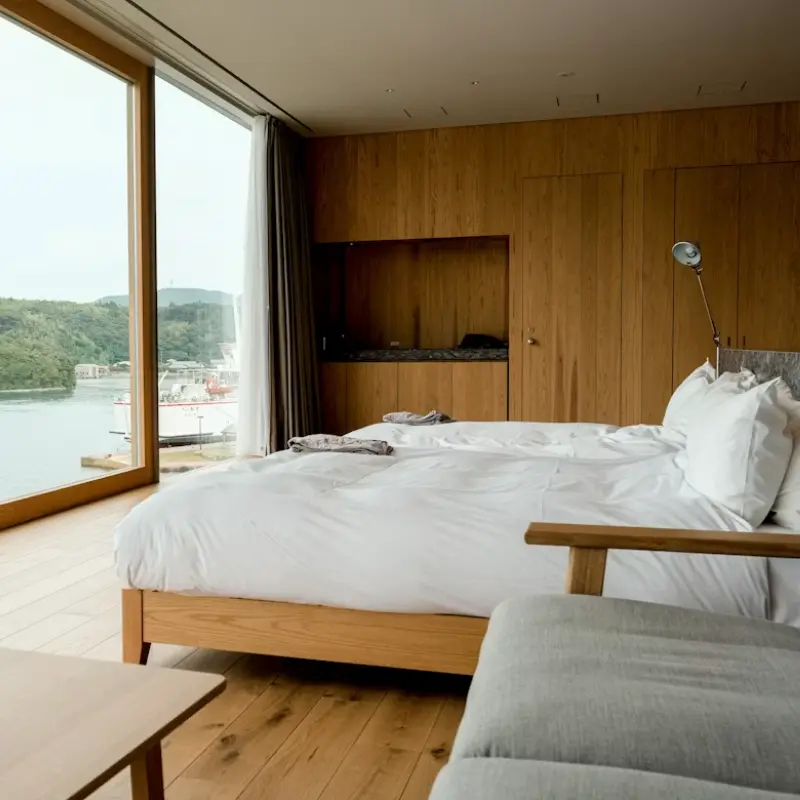
Architecture has become central precisely because of its role in shaping the entire experience. The position of a window, the way light enters, the choice of materials, and the relationship between interior and exterior profoundly influence the perception of a stay.

In this sense, contemporary hospitality has learned much from art and design. It seeks not simply to offer comfort, but to ensure that every space contributes to a precise idea of well-being. Sometimes through silence, other times through the spectacular nature of the landscape, still others through an almost meditative relationship with the surrounding nature.
Of course, there is also a more problematic side to this transformation. Many hotels now seem designed to be photographed before they are even experienced. Infinity pools, scenic corridors, panoramic terraces, and natural materials are reproduced so frequently that a Mediterranean coast resembles a tropical resort.
The structures that truly stand out are those that resist this standardization. They choose not to follow trends but instead strive to develop an authentic relationship with their location, understanding that the landscape is not a backdrop to be highlighted in photographs, but a presence with which to engage.